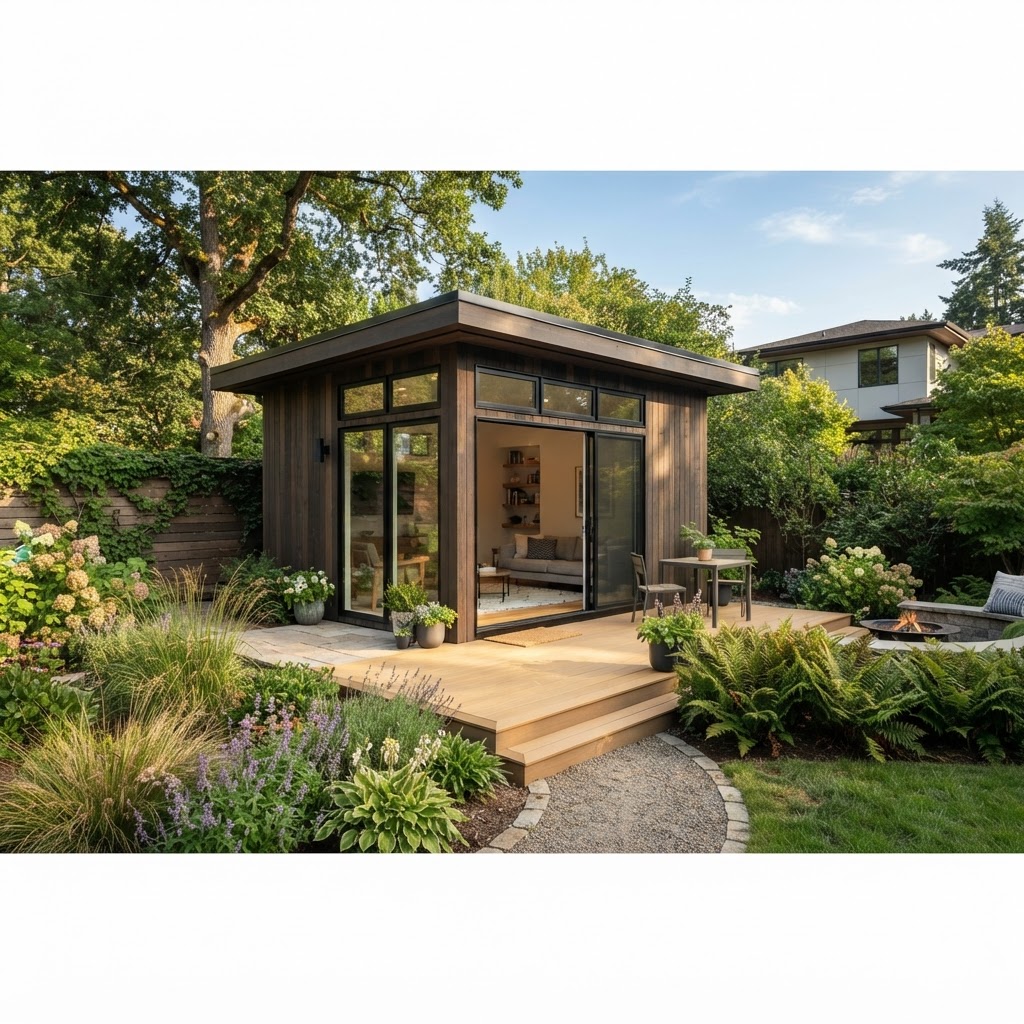
ADU vs Guest House vs In-Law Suite: Key Differences
The main difference between an ADU vs guest house vs in-law suite comes down to zoning, kitchens, and rental rights. An ADU is a legally permitted, independent unit with a full kitchen that can be rented. Guest houses and in-law suites often lack full kitchens and cannot be rented independently.
Key takeaways
ADUs require full kitchens and bathrooms, allowing them to be legally rented for income.
Guest houses typically restrict full kitchen installations and are meant for short-term, non-paying visitors.
In-law suites are usually attached or interior conversions designed for family, often sharing primary utilities.
Legal Definitions: ADU vs Guest House vs In-Law Suite
When evaluating an ADU vs guest house vs in-law suite, you must look past marketing terms and focus on building codes. An Accessory Dwelling Unit (ADU) is a specific legal classification for a secondary housing unit on a single-family or multifamily residential lot. To qualify as an ADU, the structure must provide complete independent living facilities, including permanent provisions for living, sleeping, eating, cooking, and sanitation.
A guest house is an accessory structure designed for temporary visitors. Local zoning laws usually prohibit guest houses from having a permanent cooking facility, meaning you cannot install a 220V stove or a full kitchen. Because they lack a kitchen, guest houses cannot be legally rented as independent dwellings.
An in-law suite is a colloquial term, not a legal building classification. It typically refers to an attached space, basement conversion, or a Junior ADU (JADU) designed for multigenerational living. If an in-law suite includes a full kitchen and a separate entrance, your local building department will legally classify and permit it as an ADU or JADU.
Cost, Permitting, and Timeline Comparison
Building any secondary structure requires navigating local bureaucracy, but the path varies wildly depending on what you build. Because of recent housing legislation on the West Coast (California, Oregon, Washington), ADUs are allowed by right on most residential properties. This means cities cannot arbitrarily deny your permit if you meet standard size and setback requirements.
Guest houses, however, do not always enjoy these same state-level protections. Permitting a guest house might trigger discretionary reviews or strict lot-coverage limits that an ADU would bypass.
Feature
ADU
Guest House
In-Law Suite (Attached)
Full Kitchen Allowed?
Yes (Required)
No (Usually just a wet bar)
Varies by permit type
Legal to Rent?
Yes
No
Only if permitted as an ADU/JADU
Typical Size
400 – 1,200 sq ft
150 – 600 sq ft
300 – 800 sq ft
Permit Difficulty
Streamlined by state law
Subject to strict local zoning
Moderate (interior work)
Costs scale directly with the inclusion of a kitchen and the required utility connections. Trenching new sewer and electrical lines for a detached ADU makes it the most expensive option, while an attached in-law suite leverages existing home systems.
Typical ADU cost by size
400 sq ft$150,000
800 sq ft$250,000
1,200 sq ft$350,000
Steps to Determine Which Unit You Can Build
Choosing the right structure requires matching your property’s physical constraints with your long-term financial goals. Do not guess on zoning; a mistake here can cost tens of thousands of dollars in unpermitted work fines. Follow these steps to evaluate your lot:
Verify your utility capacity. If you are on a septic system rather than city sewer, adding an ADU may require an expensive septic tank upgrade. Guest houses without full bathrooms sometimes avoid this trigger.
Define your rental intentions. If you want passive income now or in the future, you must build an ADU. If you only want a space for visiting parents, a guest house or in-law suite is sufficient.
Assess your lot space and setbacks. Detached ADUs typically require a 4-foot setback from side and rear property lines. If your yard is too small, an attached in-law suite might be your only legal option.
Review local parking requirements. While state laws often waive parking requirements for ADUs near public transit, guest houses may still trigger off-street parking mandates.
If you are unsure what your lot can legally support, our feasibility and permitting process handles the zoning research, utility checks, and site planning for you.
Financing and Appraisal Realities
How you finance the build depends heavily on what you call it on the permit. Appraisers treat a permitted ADU differently than a guest house or a finished basement. Because an ADU is a legally recognized, income-producing unit, appraisers can use the income approach to add significant value to your property.
Guest houses and in-law suites without full kitchens are valued simply as additional finished square footage. Lenders offer specific construction loans for ADUs, often allowing you to borrow against the future appraised value of the completed project. If you are building a guest house, you will likely need to rely on a standard Home Equity Line of Credit (HELOC) or cash.
For homeowners looking to maximize their property's value and utility, we strongly recommend permitting the structure as an ADU whenever possible. You can explore our pre-designed ADU models to see layouts that meet state requirements while maximizing living space.
Ultimately, the choice between an ADU vs guest house vs in-law suite dictates how you can use, finance, and eventually sell your property. If you are ready to evaluate your lot and discuss build options, contact our team to start the feasibility process.
FAQ
Can I convert a guest house into an ADU?
Yes, but it requires a change of use permit. You must upgrade the structure to meet current building codes, which often means adding a 220V electrical circuit for a kitchen, upgrading insulation, and paying local impact fees.
Does an in-law suite require a permit?
Yes. Any structural, electrical, or plumbing changes require a permit. If your in-law suite includes a kitchen, local building departments will classify and permit it as an ADU or Junior ADU (JADU), subjecting it to specific regulations.
Which option adds the most property value?
A fully permitted ADU adds the most appraised value because it is a legally recognized, income-producing dwelling. Guest houses and in-law suites without full kitchens add value as finished square footage, but appraisers cannot value them as independent rental units.
ADUGuest HouseIn-Law SuiteZoningPermitting
Planning a build or ADU?
Talk through your site, budget and timeline with a project manager.