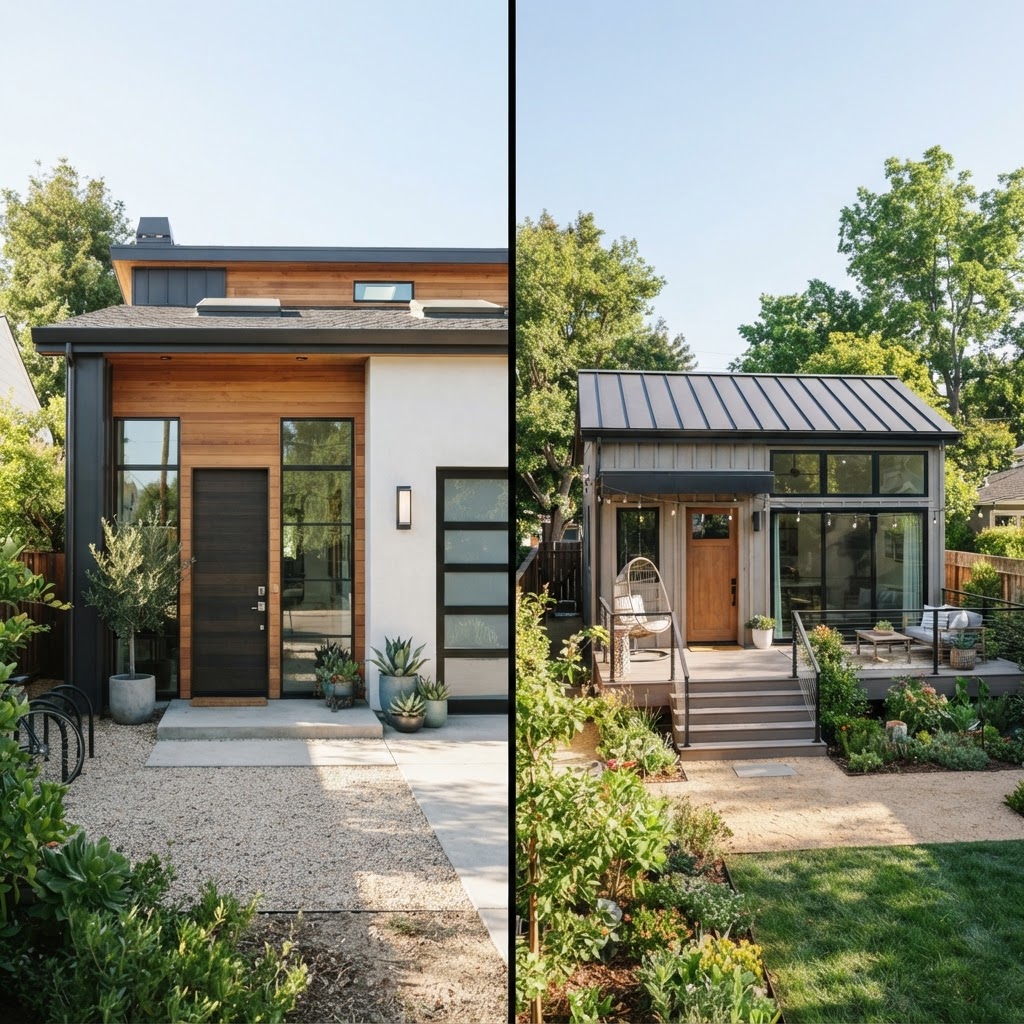
Garage Conversion vs Detached ADU: Costs, ROI & Timelines
Choosing between a garage conversion vs detached ADU depends entirely on your budget, lot size, and long-term goals. A standard two-car garage conversion typically costs $100,000 to $150,000 and finishes quickly. Conversely, a new detached unit averages $200,000 to $300,000+ but yields higher rental income and maximum privacy.
Key takeaways
Garage conversions save up to 40% upfront by utilizing existing foundations and framing.
Detached ADUs command 20% to 30% higher rental rates due to complete physical separation.
West Coast state laws generally eliminate replacement parking requirements when converting an existing garage.
Which Costs More: Garage Conversion vs Detached ADU?
Building from scratch always requires a larger capital investment. Detached ADUs require new foundations, extensive grading, and dedicated utility trenching. You can expect to pay $350 to $500 per square foot for ground-up custom construction.
Garage conversions bypass the need for new framing and roofing, significantly lowering your initial cash outlay. However, do not assume the existing structure is move-in ready. Many older garages require slab underpinning, new moisture barriers, and complete electrical panel upgrades.
When estimating expenses, consider the invisible costs. Upgrading an existing electrical panel to handle a second kitchen and HVAC system can run $3,000 to $5,000. Even with these structural repairs, a conversion usually remains the most economical route.
Average Starting Costs (West Coast)
Garage Conversion (400 sq ft)$120,000
Detached ADU (400 sq ft)$180,000
Detached ADU (800 sq ft)$250,000
Utility connections are another major cost differentiator. A detached unit typically requires trenching new water, sewer, and power lines across your yard, adding $10,000 to $20,000 to the budget. Conversions can often tie directly into the primary home’s existing systems.
Feature
Garage Conversion
Detached ADU
Upfront Cost
$100,000 – $150,000
$180,000 – $300,000+
Timeline
3 – 5 months
6 – 9 months
Utility Connections
Shared with main house
Often require new trenching
Rental Income
Moderate
Maximum
Yard Impact
None
High (reduces green space)
Timeline and Permitting Differences
Navigating local building departments dictates your project timeline. Because a conversion uses the existing footprint, cities typically process these permits faster. There are no new setbacks to negotiate, and the visual impact on the neighborhood is negligible.
Building a detached ADU triggers stricter zoning reviews, soil engineering, and Title 24 energy calculations. Opting for pre-designed ADU models can shave months off this phase. Pre-approved plans bypass lengthy structural reviews, letting you break ground weeks earlier.
Once permits are in hand, construction speed favors the conversion. A skilled crew can finish a garage build-out in 3 to 4 months. A detached unit requires site prep, foundation pouring, and ground-up framing, extending the build to 6 to 9 months. Understanding this sequence is a crucial part of the design and pre-construction process.
Maximizing ROI and Property Value
Your return on investment hinges on whether you plan to rent the unit or house family. Detached units almost always generate more rental income. Tenants pay a premium for true privacy, private entrances, and dedicated outdoor space.
If your goal is immediate cash flow, the lower upfront cost of a conversion yields a faster payback period—often 4 to 6 years. Detached units take 7 to 10 years to recoup their costs, but they add significantly more appraised value to the property over the long term.
Lenders look favorably on both, but a detached structure often appraises higher because it functions as a standalone single-family dwelling. Converting a garage increases livable square footage, but losing covered parking can be a slight negative for future buyers, depending on the neighborhood.
4 Steps to Evaluate Your Lot
Before committing capital, verify what your specific property can physically and legally support.
Measure your setbacks: Detached units generally require 4-foot side and rear setbacks. If your yard is tight, a conversion might be your only legal option.
Assess the existing foundation: Older garage slabs are often severely cracked or sloped for drainage. Leveling or replacing the slab will eat into your framing budget.
Map your utility lines: Check the distance from your sewer lateral to the proposed detached ADU site. Trenching through existing hardscape or retaining walls drives costs up rapidly.
Evaluate your parking: Check the specific local regulations across our service areas. While California, Oregon, and Washington broadly waive replacement parking for ADUs, you must personally decide if losing your garage disrupts your daily routine.
If you have an existing garage built right on the property line, it is usually "grandfathered" in. Tearing it down to build a new detached unit means you lose that favorable placement and must adhere to current setback rules.
Deciding between a garage conversion vs detached ADU comes down to balancing your available capital against your desire for privacy and rental yield. A conversion provides a fast, cost-effective housing solution using the structure you already own. A detached unit demands more money and yard space, but delivers superior long-term appreciation and tenant appeal.
FAQs
Do I need a separate address for an ADU?
Yes, local utility companies and the post office require a distinct address for billing and emergency services. Your city will assign a new unit number (such as "Unit B" or "1/2") during the final stages of the permitting process.
Can I build a detached ADU if my yard is sloped?
You can, but building on a slope requires extensive site work, retaining walls, and engineered foundations. These requirements can add $20,000 to $50,000 to your baseline construction costs compared to a flat lot.
Will a garage conversion increase my property taxes?
Yes, but only the value of the new construction is assessed. The primary home’s existing base assessment remains unchanged. The tax increase is proportional to the added value of the ADU, not a reassessment of the entire property.