Modular vs Manufactured Homes: Key Differences Explained
The main difference between modular vs manufactured homes comes down to building codes and foundations. Modular homes are built to local state codes, placed on a permanent foundation, and financed like site-built homes. Manufactured homes are built to federal HUD codes, feature a steel chassis, and face stricter zoning restrictions.
Key takeaways
Modular homes appreciate in value and easily qualify for standard 30-year mortgages.
Manufactured homes follow federal HUD codes, requiring specific local zoning approvals.
Site preparation, utility trenching, and lot access dictate which option is actually viable for your property.
HUD Code vs. Local Building Codes
The fundamental distinction begins on the factory floor with regulatory compliance. Manufactured homes are constructed according to the federal HUD code, which was established in 1976 to replace unregulated mobile homes. They are built on a permanent steel chassis that remains in place even after delivery to your site.
Modular homes must pass the exact same structural, snow load, and energy requirements as a traditional stick-built house. In California, Oregon, and Washington, this means adhering strictly to the International Residential Code (IRC) and state-specific mandates like Title 24 for energy efficiency. Because they meet these rigorous standards, modulars can be stacked into multi-unit developments, whereas manufactured homes generally max out at single-story footprints.
When a local building inspector visits a modular site, they treat the structure exactly like a site-built home. They inspect the foundation, the utility connections, and the marriage line where the modules join. With manufactured homes, local inspectors only verify the foundation attachment and utility hookups, as the factory HUD label supersedes local structural codes.
Feature
Modular Homes
Manufactured Homes
Building Code
Local/State (IRC, CBC)
Federal (HUD)
Foundation
Permanent (Stem wall, slab)
Steel chassis (often with skirting)
Financing
Traditional Mortgage
Chattel loan or FHA Title I
Value Trend
Appreciates like site-built
Varies (often depreciates unless on land)
Zoning
Accepted almost everywhere
Heavily restricted in urban areas
Financing, Appraisals, and Resale Value
Lenders view these two types of factory-built homes very differently. A modular home is legally treated as real property, allowing buyers to secure standard Fannie Mae or Freddie Mac conventional mortgages. If you plan to sell later, a modular home pulls appraisal comparables directly from the traditional neighborhood houses surrounding it.
Manufactured homes that are not permanently affixed to land are legally classified as personal property. They are typically financed using chattel loans, which carry higher interest rates and shorter repayment terms. While placing a manufactured home on an engineered foundation can convert it to real property, the appraisal value will still be compared primarily against other manufactured homes in the area.
This appraisal distinction heavily impacts your long-term return on investment. A modular home built in a growing West Coast market will appreciate alongside the local real estate market. A manufactured home, even on owned land, often sees slower appreciation due to lender hesitation and buyer perception.
Average West Coast Project Cost (Per Sq Ft)
Manufactured$160
Modular$290
Site-Built$420
Modular vs Manufactured Homes: Zoning and Feasibility
The biggest hurdle we see is a landowner mistakenly assuming they can drop a factory-built home anywhere. Coastal and urban areas on the West Coast typically restrict manufactured homes to designated parks or specific rural agricultural zones. Modular homes, however, are legally classified exactly like standard single-family homes or ADUs, meaning they are permitted anywhere residential construction is allowed.
Before ordering any structure, you must perform a rigorous site evaluation. We always walk clients through these specific constraints:
Verify your parcel zoning: Check your county's allowable uses to see if HUD-coded structures are explicitly permitted on your specific lot.
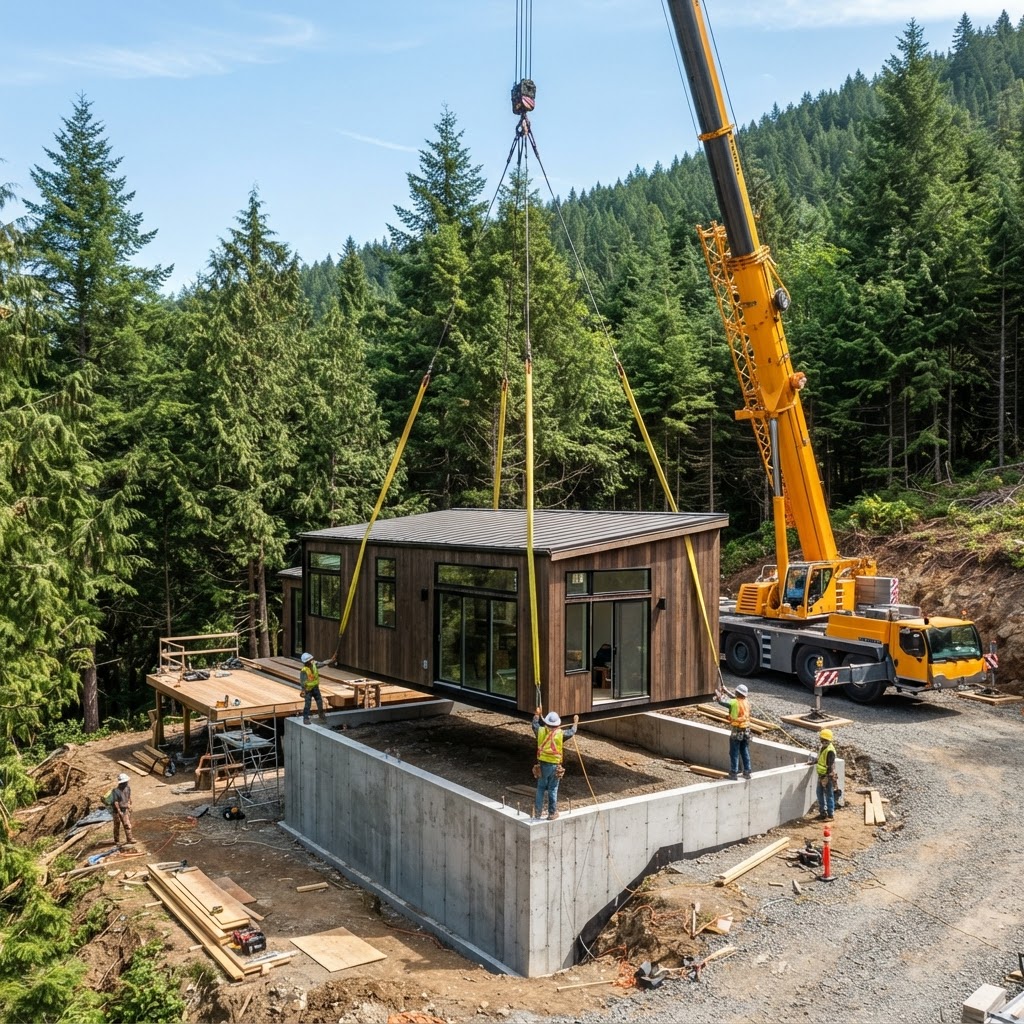
Assess site access: Delivery trucks need wide, straight clearances, and craning a modular home over trees requires specific street widths.
Evaluate utility access: Trenching water, sewer, and power can break a budget if the lot is raw land located far from city hookups.
Confirm foundation requirements: A sloped lot requires extensive dirt work and custom foundation engineering, regardless of what happens in the factory.
Evaluating these exact constraints is the critical first step in our pre-construction and site assessment. Skipping this step often leads to purchasing a home that cannot legally be placed on your property.
Real-World Scenarios: Which Should You Build?
To make this practical, let us look at two common scenarios we encounter. In the first scenario, a homeowner in Los Angeles wants to add a rental unit to their backyard. Because of strict urban zoning and the desire for maximum property value increase, a modular ADU is the only viable choice. Reviewing different modular home designs ensures the new unit matches the primary residence and meets local architectural standards.
In the second scenario, a client owns 10 acres of flat, rural land in eastern Washington and needs a secondary dwelling for a caretaker. The local county allows HUD-coded homes, and the client wants to minimize upfront costs. Here, a manufactured home makes perfect sense. It deploys quickly, costs less per square foot, and serves its functional purpose without requiring the complex foundation engineering of a modular build.
If you are still weighing your options, taking the time to compare our models side-by-side will help clarify the structural and aesthetic differences.
Deciding between modular vs manufactured homes is rarely about the factory itself; it is about your specific lot, budget, and long-term financial goals. Always run a full site feasibility study before purchasing a floor plan to avoid expensive permitting dead-ends and ensure your project actually pencils out.
Frequently Asked Questions
Do modular homes lose their value?
No. Because modular homes are built to local building codes and placed on permanent foundations, they appreciate in value at the exact same rate as traditional site-built homes. Appraisers treat them as permanent real estate.
Can I place a manufactured home on my empty lot?
It depends entirely on your local zoning laws. Many urban and coastal West Coast jurisdictions restrict manufactured homes to designated parks. You must verify that your specific parcel allows HUD-coded structures before purchasing.
How long does it take to build and install these homes?
Factory construction takes just a few months, but the total timeline depends on local permitting and site work. Preparing the foundation and trenching utilities usually takes 12 to 16 weeks, happening simultaneously while the home is being built.
Modular HomesManufactured HomesHome BuildingWest Coast Real Estate
Planning a build or ADU?
Talk through your site, budget and timeline with a project manager.